What is Freight Forwarding? A Complete Guide to Types, Process & Key Benefits
The Invisible Engine of Global Trade
Start with a compelling reality: Global commerce, the engine of modern economies, relies on the seamless movement of goods across continents. It is estimated that over 80% of global trade goods by volume are handled by freight forwarders. This statistic underscores a complex logistical challenge that few businesses can handle alone.
The core problem for any company looking to expand globally is the immense complexity of international shipping. This involves navigating a labyrinth of multiple carriers (trucks, ships, planes), contradictory customs regulations in dozens of countries, mountains of international shipping documentation, and various languages and time zones. For a business owner, managing this complexity is a massive drain on resources and a serious source of risk.
The simple, strategic solution is freight forwarding. This service acts as the strategic coordination hub, a single point of contact that manages all aspects of the move, allowing businesses to focus on their core operations, production, and sales. For businesses seeking a reliable freight forwarding partner in the complex global landscape, experienced firms like Transvoy Logistics provide the necessary expertise.
Thesis Statement: This complete freight shipping guide will explain what freight forwarding is, detail the different international shipping methods and freight services available, illustrate the comprehensive step-by-step freight forwarding process, and outline the key functions that make a freight forwarder an indispensable part of your global supply chain.
What is Freight Forwarding?
Clear Definition: The Logistics Architect
A freight forwarder is an expert logistics firm that specialises in the organisation and coordination of shipments on behalf of exporters, importers, and other companies. Crucially, a freight forwarder is not a carrier. They do not own the ships, planes, or trucks (though some large forwarders may own certain assets). Instead, they are an intermediary—a professional agent who plans, coordinates, and executes the entire movement of goods from origin to final destination.
They are best understood through the "Architect" Analogy:
- The freight forwarder is the architect of the shipment, designing the complete transport plan, managing deadlines, handling documentation, and coordinating all parties involved.
- The carriers (shipping lines, airlines, trucking companies) are the builders who physically move the cargo according to the forwarder's plan.
This distinction highlights that the forwarder's value lies in their expertise and network, not in their physical assets.
Key Distinction: Forwarding vs. Broader Logistics
It's important to clarify the boundary between freight forwarding and general logistics. While both involve supply chain management:
- Freight Forwarding focuses specifically on the transportation element: organising, documentation, and moving cargo across borders.
- Logistics is a broader field that often includes warehousing, inventory management, packaging, fulfilment, and internal process planning.
A freight forwarding company offers specialised transport services; a full-service logistics company in India (or globally), such as Transvoy Logistics, may include forwarding as just one of its many comprehensive offerings.
The 4 Key Functions of a Freight Forwarder
To truly understand what a freight forwarder does, one must examine their four main areas of responsibility, which collectively ensure a seamless cross-border move.
1. Transportation Coordination & Route Optimisation
The primary function of a freight forwarding partner like Transvoy Logistics is to select the optimal route and international shipping methods for your cargo. This involves:
- Mode Selection: Determining whether air freight, ocean freight (sea freight), rail, or road is the best fit, often by conducting a detailed freight cost comparison based on the client's needs for speed and budget.
- Negotiated Rates: Leveraging their bulk shipping volumes and long-standing carrier relationships to secure the best possible rates and guaranteed space, which small or medium businesses could not achieve on their own.
- Schedule Management: Creating a precise, door-to-door schedule and booking all required legs of the journey.
2. Documentation and Customs Clearance Mastery
This is arguably the forwarder's most critical value proposition. International shipping documentation is notoriously complex, and errors can lead to massive delays, fines, and shipment seizures.
A skilled freight forwarder handles all paperwork, including:
- The Bill of Lading (B/L): The contract between the shipper and the carrier, which also serves as a receipt for the cargo and a document of title.
- Commercial Invoices, Packing Lists, Certificates of Origin, and Letters of Credit.
- Customs Clearance: Firms like Transvoy Logistics specialise in this, ensuring the goods are properly classified (HTS codes), declared, and that all duties, taxes, and fees are correctly paid to navigate complex import/export customs clearance procedures efficiently.
Also Read : How to Choose the Best Freight Forwarder: A Guide The Evolution of Logistics: From Manual to Digital
3. Cargo Consolidation & Warehousing
For clients who do not have enough cargo to fill a full container or truck, a forwarder saves money through shipment consolidation:
- LCL/LTL: They combine multiple smaller shipments (Less than Container Load or Less than Truckload) from different shippers into a single FCL (Full Container Load) or FTL shipment.
- This shared container is shipped under the forwarder’s name, significantly reducing the cost for each shipper.
- They also offer temporary freight forwarding services like warehousing and storage at both the origin (before shipping) and the destination (before final delivery).
4. Risk Management and Insurance
The forwarder acts as a risk mitigator for the shipper by:
- Advising on the appropriate Incoterms (e.g., FOB, CIF) to clearly define risk transfer and responsibility.
- Arranging cargo insurance to protect the shipper against loss or damage during transit.
- Providing real-time tracking and proactive problem-solving to address unforeseen issues (e.g., port congestion, customs delays, weather) before they escalate.
The Freight Forwarding Process: A Step-by-Step Journey
The entire freight forwarding process can be broken down into six distinct stages, detailing the journey from the factory floor to the customer's door.
1. Export Haulage (Pre-Carriage): The freight forwarder arranges the initial pickup of the goods from the shipper's warehouse or factory. This local move, often by truck or rail, transfers the goods to the forwarder’s warehouse or the carrier’s terminal (port or airport).
2. Origin Handling & Export Customs: At the origin, the forwarder’s local agent takes over. This stage involves checking and verifying the cargo and documentation, shipment consolidation (if applicable), and handling Export Customs Clearance—ensuring the goods are legally allowed to leave the country.
3. Main Carriage (International Transit): This is the long-haul leg of the journey. Based on the chosen international shipping methods—air freight or sea freight—the cargo is loaded onto the aircraft or vessel. The forwarder constantly tracks the shipment and communicates its status.
4. Import Customs Clearance: Upon arrival at the destination port or airport, the most critical step begins. The forwarder or their local partner (like Transvoy Logistics in relevant markets) submits the required international shipping documentation to the destination country’s authorities, manages inspections, and ensures all duties and taxes are paid for successful customs clearance.
5. Import Haulage & Final Delivery: Once cleared through customs, the final transport is arranged. The goods are moved from the port or terminal to the consignee's designated receiving facility.
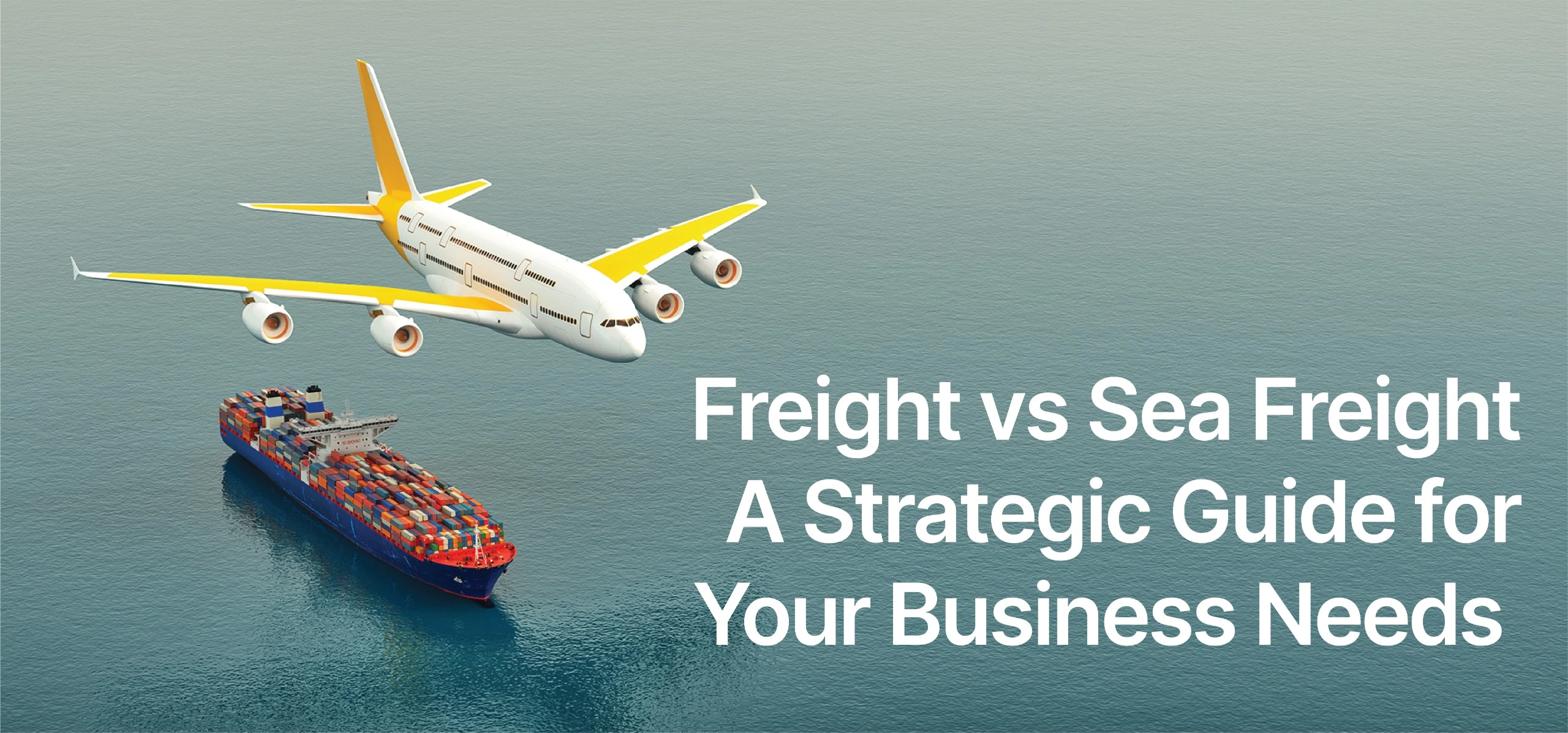
Types of Freight Forwarding Services: Air Freight vs. Sea Freight
A crucial part of any freight shipping guide is understanding the different modes of transport, each offering a distinct balance of speed and freight cost comparison.
1. Ocean Freight (Sea Freight): This is the workhorse of global trade, carrying the vast majority of all non-liquid bulk goods.
- Pros: Highly cost-effective for large volumes and heavy goods. Ideal for non-urgent shipments and excellent for freight cost comparison.
- Cons: Slow transit times (often 20-45 days).
- Options: Full Container Load (FCL) vs. Less than Container Load (LCL).
2. Air Freight: This mode is reserved for speed, security, and high-value cargo.
- Pros: Fastest transit time (typically 1-7 days). Offers predictable schedules. Best for perishable, urgent, or expensive goods.
- Cons: The Highest cost per kilogram, and capacity is highly restricted compared to ocean freight.
3. Road and Rail Freight: These are essential components for both domestic and cross-border land transportation (e.g., US-Canada, or within Europe/Asia). They are often used as the "first mile" (export haulage) and "last mile" (import haulage) legs of any multimodal shipment.
4. Multimodal/Intermodal Freight: This involves combining two or more modes (e.g., sea freight + rail + truck) under a single Bill of Lading and one contract, entirely managed by the freight forwarder. This provides a seamless, optimised international shipping experience. Transvoy Logistics, as an international freight forwarding services provider, is well-equipped to manage such complex integrated solutions.
Benefits and Considerations
Benefits of Using a Freight Forwarder
Partnering with a dedicated freight forwarding company offers numerous strategic advantages:
- Cost-Saving: Through shipment consolidation and volume discounts, forwarders often get lower freight costs than a company could secure individually.
- Time-Saving: They eliminate the hours a business would spend booking, tracking, and coordinating carriers, freeing up internal resources.
- Expertise & Compliance: Their core value is guaranteed compliance with complex customs clearance rules, drastically reducing the risk of costly penalties and delays.
- Risk Reduction: They manage damage claims, insurance, and unforeseen logistical hurdles, ensuring a stable supply chain.
- Scalability: A forwarder's global network allows a business to effortlessly scale operations or enter new markets without building its own logistics infrastructure.
How to Choose a Freight Forwarder
When selecting an international freight forwarding services provider or a reliable logistics company in India (like Transvoy Logistics), focus on key criteria:
- Global Network: Ensure they have established agents or offices in your key export and import markets.
- Technological Capabilities: Look for forwarders that offer transparent, real-time tracking and digital documentation management.
- Pricing Transparency: The total freight cost comparison must be clear, distinguishing between carrier costs, port fees, and the forwarder's own service fees.
Conclusion: Your Strategic Logistics Partner
A freight forwarder is far more than just a vendor; they are an essential strategic freight forwarding partner for any business engaged in global trade. By acting as the central command for your international shipping, they transform the chaos of cross-border movement into a highly efficient, predictable, and compliant process.
Ultimately, understanding what freight forwarding is empowers businesses to make better logistics decisions, expand confidently into new markets, and streamline their supply chain. They are the necessary, invisible engine that ensures your products get where they need to be, when they need to be there. For comprehensive, expert freight services, consider partnering with Transvoy Logistics for your next international shipment.